Trying to choose between Maple Valley and Covington? If you are narrowing your South King County home search, this is one of the most common crossroads you will face. Both cities offer access to the greater Seattle-Bellevue-Everett area, but they live a little differently day to day. This guide will help you compare housing costs, commute patterns, amenities, and overall lifestyle fit so you can move forward with more confidence. Let’s dive in.
Maple Valley vs. Covington at a Glance
Maple Valley and Covington sit in the same general search area, but the numbers suggest two different buyer experiences. Maple Valley tends to feel more residential and recreation-oriented, while Covington tends to feel more convenience-driven and budget-conscious.
According to the U.S. Census QuickFacts for Maple Valley, Maple Valley has a population of 28,553, with 31.3% of residents under 18, an 83.2% owner-occupied housing rate, and a median owner-occupied home value of $724,700. In Covington’s QuickFacts, the city has a population of 21,567, 23.6% of residents under 18, a 78.9% owner-occupied housing rate, and a median owner-occupied home value of $637,300.
If you are deciding between the two, the biggest question is not which city is “better.” It is which one fits your budget, routine, and priorities more naturally.
Housing Costs and Home Base Feel
For many buyers, price is the first filter. Based on Census data, Covington comes in lower on both home values and monthly ownership costs.
Maple Valley’s median value of owner-occupied homes is $724,700, with median monthly owner costs with a mortgage at $2,984. Covington’s median home value is $637,300, and median monthly owner costs with a mortgage are $2,668. If monthly payment comfort matters most, Covington may give you more room to work with.
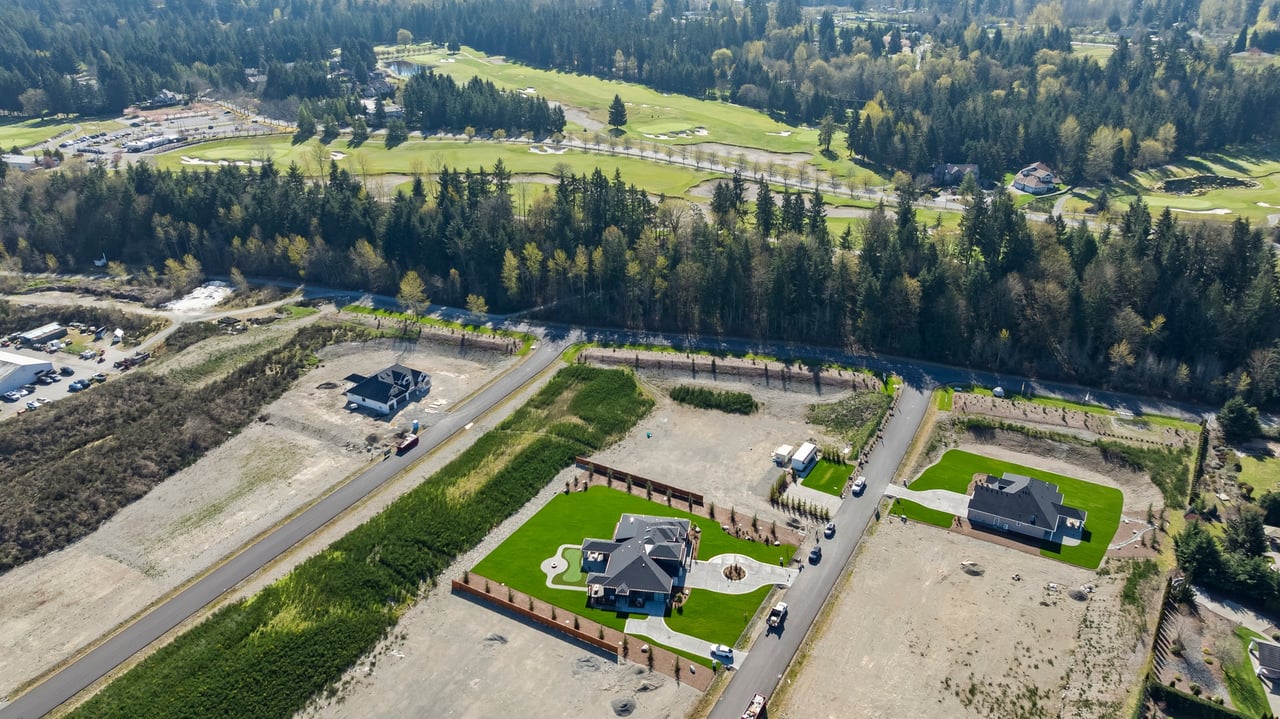
The housing mix also helps explain how each city feels. Maple Valley’s zoning includes low-density residential categories like R-4, R-6, and R-8, plus parks, open space, and public land designations, as reflected in the city’s planning framework cited in the research. Covington’s downtown zoning includes low-density, medium-density, multifamily, mixed residential, mixed housing-office, community commercial, neighborhood commercial, and town center designations, which points to a more corridor-centered layout.
In plain terms, Maple Valley often reads as a more settled suburban environment with an open-space identity. Covington tends to offer a more commercially connected setting, especially if you want errands and shopping clustered along main routes.
Household Trends and Daily Lifestyle
The data also shows some clear differences in household makeup. Maple Valley has an average household size of 3.01 people, while Covington’s average household size is 2.87.
Maple Valley also has a larger share of residents under 18 at 31.3%, compared with 23.6% in Covington. That does not tell you everything about a place, but it does suggest Maple Valley has a somewhat more child-heavy population profile.
On the income side, Maple Valley’s median household income is $152,885, compared with $134,502 in Covington. The research report also notes a higher share of residents with a bachelor’s degree or more in Maple Valley, 50.2% versus 37.3% in Covington. Together, those figures support the idea that Maple Valley may carry stronger price pressure, while Covington may appeal to buyers looking for a somewhat more accessible entry point in the same broader area.
Commute Times and Getting Around
If your week revolves around getting to work, school, appointments, and shopping efficiently, the commute difference matters. Census data shows Maple Valley’s mean travel time to work is 37.0 minutes, while Covington’s is 33.4 minutes.
That gap is not massive, but it is meaningful when repeated every weekday. Covington has an advantage on average commute time, and its roadway pattern supports that convenience-focused feel.
The Washington State Department of Transportation’s SR 516 Covington study identifies SR 516 as Covington’s main commercial route and primary east-west roadway, with access to SR 18 and a major retail area near 168th Place SE. In Maple Valley, the research notes that SR 169 carries commuter traffic and experiences increased congestion during peak periods near the city.
Maple Valley is also served by King County Metro Route 168, which connects Maple Valley to Timberlane, Covington, Kent East Hill, and Kent Station. For buyers who use transit connections selectively, that can be a useful piece of the puzzle.
Recreation and Outdoor Access
If trails, parks, and open space are high on your list, Maple Valley has a stronger recreation identity in the research. King County’s Green to Cedar River Trail project includes an interim corridor through Maple Valley between SE Kent Kangley Road and Flaming Geyser State Park.
The research also cites Maple Valley GIS resources showing trails and walkways, city parks and open spaces, and disc golf fairways. That supports the impression of a city where outdoor access is more woven into the local identity.
Covington still offers meaningful nearby green space. King County describes Soos Creek Regional Park and Trail as a 770-acre multiuse park with about six miles of paved regional trail, trailheads, picnic areas, and open-space facilities. So while Covington may feel more retail- and corridor-oriented, you are not giving up access to outdoor recreation.
Shopping and Everyday Convenience
This is one area where Covington clearly stands out. The research report points to SR 516 as the city’s main commercial route, with regional access and major retail anchors including the Fred Meyer and Costco shopping complex near 168th Place SE.
If you want a home base where routine errands can feel more direct, Covington likely has the edge. Grocery runs, household shopping, and basic day-to-day needs are more central to the city’s layout.
Maple Valley can still work well for buyers who do not mind a more commuter-suburb rhythm. But if your ideal week includes quick stops and fewer out-of-the-way errands, Covington may feel more efficient.
School District Context
For many buyers, school district boundaries are part of the location decision, even if their reasons vary. Maple Valley is centered on Tahoma School District, which says it serves about 9,280 students in and around Maple Valley.
Covington is in Kent School District, which reports 25,377 students and 44 schools, including Covington-area campuses such as Covington Elementary, Crestwood Elementary, Mattson Middle, and Kentwood High, according to the research report. This is less about ranking one district over another and more about understanding which district footprint aligns with the area you want to live in.
If district alignment is important in your search, it helps to confirm property-specific boundaries early. That can save time and help you compare homes more accurately.
Which City Fits You Best?
Maple Valley may be the better fit if you want:
- A more residential, open-space-oriented setting
- Higher owner-occupancy rates
- A larger share of households with children
- Trail access and a stronger parks identity
- A suburban feel that leans more settled than commercial
Covington may be the better fit if you want:
- A lower median home value and lower monthly owner costs
- A slightly shorter average commute
- Easier access to shopping and major road connections
- A more corridor-centered layout with retail convenience
- A city that appears to be growing a bit faster in recent years
The research report notes population growth from 2020 to 2024 at 1.9% in Maple Valley versus 3.8% in Covington. That suggests Covington may be the somewhat faster-growing and more commercially active city core, while Maple Valley remains the more recreation-forward suburban base.
A Smart Way to Decide
If you are still torn, the best next step is to compare the two cities through your actual routine. Think about what matters most over a full week, not just on showing day.
Ask yourself:
- What monthly payment range feels comfortable?
- How much do commute time and route options matter?
- Do you want trail and open-space access close by?
- Would you rather live near a stronger shopping corridor?
- Are you focused on a certain school district area?
Once you answer those questions, the choice usually becomes clearer. Maple Valley and Covington are both strong options in South King County, but they support different lifestyles.
Choosing the right home base is about more than finding a house. It is about matching your home search to how you actually want to live. If you want a calm, data-driven conversation about which city makes the most sense for your goals, Joe Perkins can help you compare options and navigate the next step with clarity.
FAQs
Which City is More Affordable for Homebuyers, Maple Valley or Covington?
- Covington appears more affordable based on the lower median owner-occupied home value of $637,300 and lower median monthly owner costs with a mortgage of $2,668, compared with Maple Valley’s $724,700 and $2,984.
Which City Has a Shorter Average Commute, Maple Valley or Covington?
- Covington has the shorter mean travel time to work at 33.4 minutes, compared with 37.0 minutes in Maple Valley.
Which City Has More Trails and Open-space Identity, Maple Valley or Covington?
- Maple Valley has the stronger trail and open-space identity in the research, supported by the Green to Cedar River Trail project and city GIS references to trails, parks, and open spaces.
Which City is More Convenient for Shopping and Errands, Maple Valley or Covington?
- Covington is more convenience-oriented for errands because SR 516 serves as the main commercial route and includes major retail anchors such as Fred Meyer and Costco.
Which School District Serves Maple Valley and Covington?
- Maple Valley is centered on Tahoma School District, while Covington is in Kent School District according to the research report.
Which City May Feel More Centered on Larger Households, Maple Valley or Covington?
- Maple Valley may feel more centered on larger households because its average household size is 3.01 and 31.3% of residents are under 18, compared with Covington’s 2.87 average household size and 23.6% under-18 share.