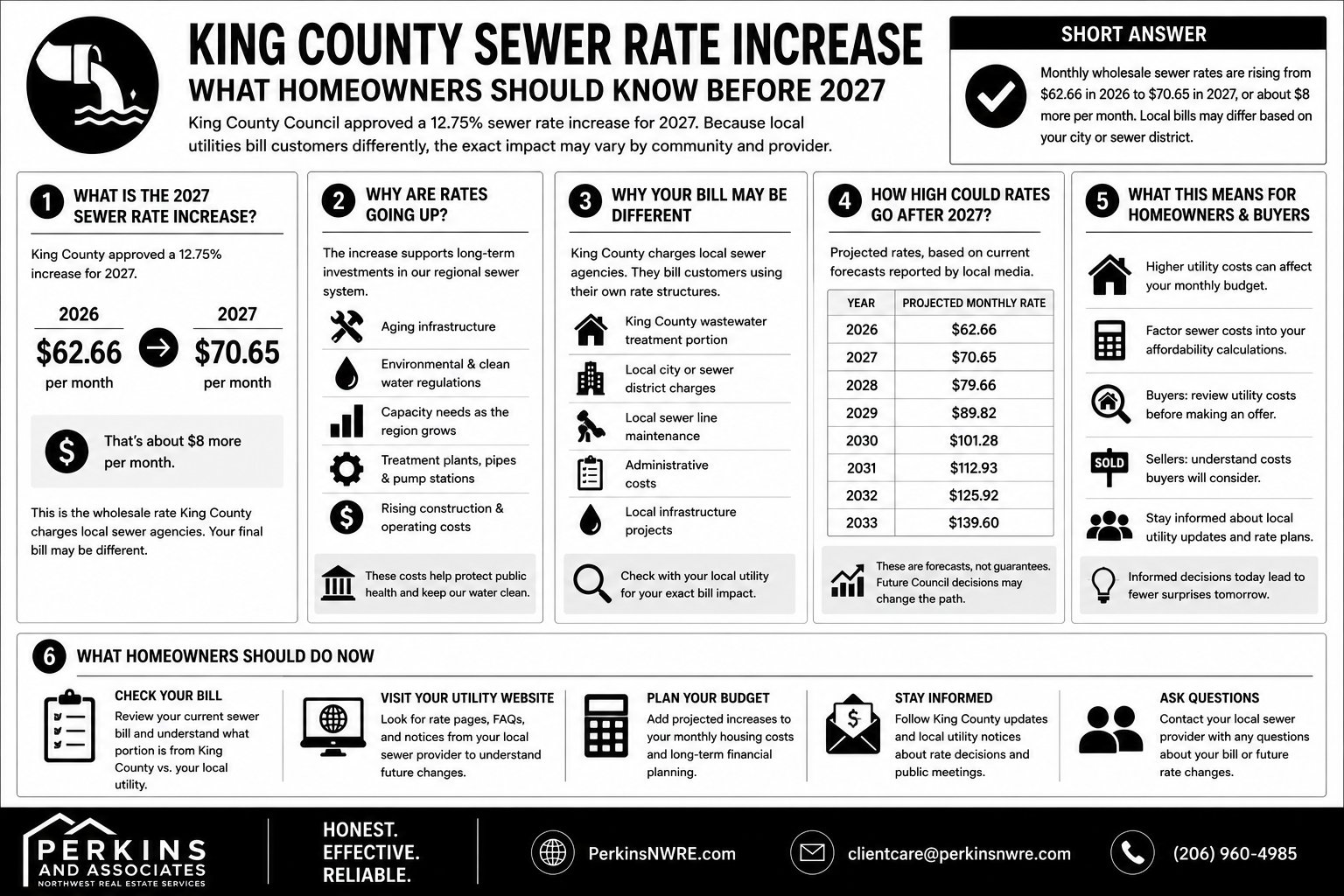
King County residents are expected to see higher sewer costs in 2027 after the King County Council approved a 12.75% rate increase. The monthly wholesale sewer rate is set to rise from $62.66 in 2026 to $70.65 in 2027, or about $8 more per month. Because local cities and sewer districts bill customers differently, the exact impact may vary by community and utility provider.
Sewer bills are not usually the first thing buyers or homeowners think about when making real estate decisions. But when rates rise sharply, they become part of the bigger affordability conversation.
In 2026, King County Council approved a significant sewer rate increase for 2027, and future forecasts show additional increases may follow. For homeowners, buyers, sellers, and market-watchers across King County, this is worth understanding because utility costs are part of the true cost of homeownership.
This guide explains what changed, why sewer rates are rising, how local bills may differ, and what this means for real estate decisions in South King County communities such as Renton, Kent, Auburn, Maple Valley, Covington, Black Diamond, Enumclaw, and nearby areas.
What Is the King County Sewer Rate Increase for 2027?
King County approved a 12.75% sewer rate increase for 2027, raising the monthly wholesale sewer rate from $62.66 to $70.65.
According to King County’s sewer rate and capacity charge information, the sewer rate is the monthly amount the King County Wastewater Treatment Division charges local sewer agencies. Those agencies then collect wastewater and send it into King County’s regional system for treatment.
Local news reporting from KIRO 7 and MyNorthwest also reported that the approved 2027 increase adds about $8 per month for customers, moving the rate from about $63 to about $71.
That number is important, but homeowners should understand one detail: King County’s rate is not always the exact same as the final sewer bill a household receives. Local utilities may have their own rate structures, local system costs, and billing methods.
Why Are King County Sewer Rates Going Up?
King County sewer rates are rising because the regional wastewater system needs major investment for aging infrastructure, environmental regulations, capacity, and long-term reliability.
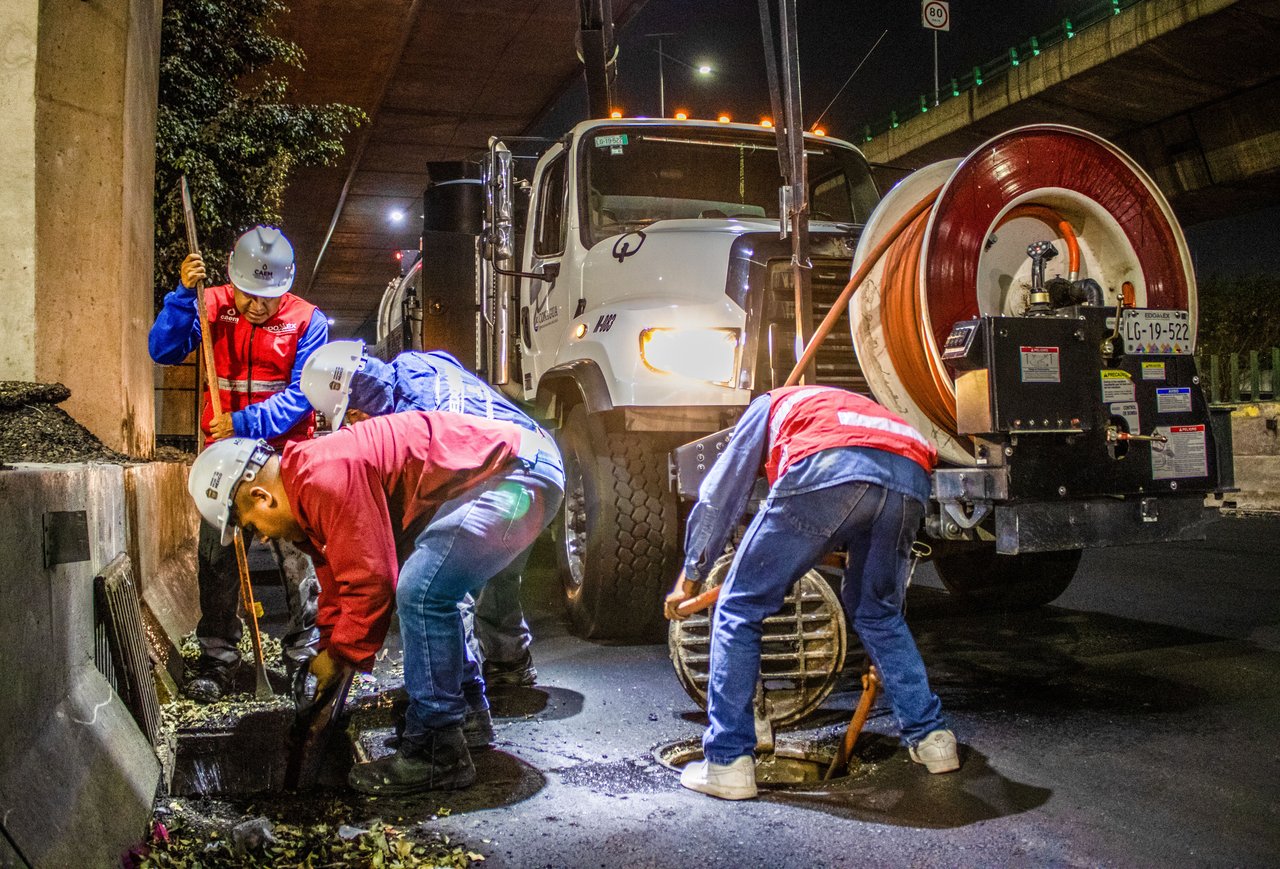
The King County Wastewater Treatment Division is responsible for collecting and treating wastewater to protect public health and water quality. King County explains that sewer rates help pay for the cost of operating, maintaining, and modernizing that system.
The main cost drivers include:
- Aging wastewater infrastructure
- Treatment plant and pipe maintenance
- Pump stations and regional facilities
- Capacity needs as the region grows
- Environmental and clean water regulations
- Long-term capital projects
- Rising construction and operating costs
Councilmembers acknowledged the financial pressure this creates for residents. According to local reporting, King County leaders also raised concerns that the current rate path may not be sustainable if double-digit increases continue.
For homeowners, the key takeaway is simple: this increase is tied to regional infrastructure costs, not just one city or one local sewer project.
Why Might Your Sewer Bill Be Different From the County Rate?
Your sewer bill may be different from the King County rate because King County charges local sewer agencies, and those agencies pass costs to customers through their own rate structures.
This means a homeowner in Algona, Renton, Kent, Auburn, Maple Valley, Bellevue, Seattle, or another city may not see the exact same bill impact.
A sewer bill may include:
- The King County wastewater treatment portion
- Local city or sewer district charges
- Local sewer line maintenance
- Administrative costs
- Local infrastructure projects
- Utility-specific billing methods
The City of Algona’s public notice is a good example of how this works. Algona explained that a customer’s sewer bill includes both City of Algona costs and the King County Wastewater Treatment Division portion. Local agencies may also consider their own rate changes to maintain infrastructure within city limits.
For homeowners, this means the best next step is to check your local utility provider’s sewer billing information, not only the King County rate.
How High Could Sewer Rates Go After 2027?
Current forecasts reported by local media show additional projected sewer rate increases after 2027, with monthly rates potentially reaching about $125.92 by 2032 if the forecasted path holds.
The reported forecast included the following projected rates:
Year | Projected Monthly Sewer Rate |
|---|---|
2026 | $62.66 |
2027 | $70.65 |
2028 | $79.66 |
2029 | $89.82 |
2030 | $101.28 |
2031 | $112.93 |
2032 | $125.92 |
2033 | $136.00 |
2034 | $146.88 |
2035 | $158.64 |
2036 | $161.42 |
These are projections, not final approved rates for every future year. King County leaders have indicated they are looking at ways to slow the rate path, review regulations, and evaluate affordability.
Still, the forecast matters because it shows why sewer costs are becoming part of the household budgeting conversation. A bill increase of about $8 per month may be manageable for some households in 2027, but repeated increases can add up quickly over time.
What Does This Mean for Homeowners?
For homeowners, the sewer rate increase means utility costs should be reviewed as part of the broader household budget.
This is especially important for homeowners on fixed incomes, households already managing higher insurance or tax costs, and owners planning improvements or future moves.
Homeowners should consider:
- Reviewing current sewer and utility bills
- Checking whether their local utility has additional rate changes
- Asking about senior, low-income, or disability discounts if available
- Budgeting for higher monthly costs in 2027
- Watching future rate proposals
- Understanding whether local sewer costs differ by city or utility district
Some local agencies may offer assistance or discounted rates for qualifying residents, but availability varies. King County notes that it is a wholesale provider and does not bill most households directly, which means customer assistance programs are usually handled at the local utility level.
What Should Buyers Know Before Purchasing a Home?
Buyers should ask about sewer costs before purchasing a home because utility bills are part of the real monthly cost of ownership.
A mortgage payment is not the only number that matters. Buyers also need to consider property taxes, insurance, HOA dues, utilities, maintenance, and future rate increases. Sewer costs may not make or break a purchase on their own, but they can affect the household budget over time.
Before making an offer, buyers should ask:
- Is the home connected to public sewer or septic?
- Who provides sewer service?
- What is the current sewer bill?
- Are local sewer rates increasing?
- Does the city or sewer district add charges beyond King County’s rate?
- Are there local assistance programs?
- Are there any known assessments or utility-related fees?
This is especially useful when comparing homes across cities. A buyer looking at Renton, Kent, Auburn, Maple Valley, Covington, Black Diamond, or Enumclaw should not assume utility costs are identical.
For buyers comparing affordability across communities, our guide to where South King County buyers can still find relative value in 2026 can help frame the larger cost conversation.
What Should Sellers Know Before Listing?
Sellers should know that buyers may ask more detailed questions about monthly utility costs as affordability pressure continues.
A sewer rate increase does not mean a home is less marketable. It does mean sellers should be prepared to answer practical questions clearly. Buyers are paying closer attention to the full cost of ownership, especially in markets where mortgage rates, insurance, taxes, and maintenance costs are already part of the decision.
Before listing, sellers may want to gather:
- Recent sewer bills
- Water and utility billing information
- Any local utility notices
- HOA utility details, if applicable
- Information about whether the home is on sewer or septic
- Maintenance records for private systems, if relevant
This should not be presented as a pricing guarantee or a value claim. It is simply useful listing context. Pricing should still be based on comparable sales, property condition, market activity, and buyer demand.
Why This Matters for South King County
The sewer rate increase matters across South King County because many local households are already weighing affordability, commute, home prices, taxes, insurance, and utility costs.
Cities such as Renton, Kent, Auburn, Maple Valley, Covington, Black Diamond, and Enumclaw each have different housing markets and utility billing structures. A regional sewer rate increase adds another layer to the cost-of-living conversation.
For some buyers, a slightly lower-priced home in one city may come with different utility costs, commute tradeoffs, or maintenance needs. For homeowners, rising utility costs may influence budgeting, timing, or future planning. For sellers, it may shape buyer questions during showings.
This does not mean sewer costs should dominate a real estate decision. It means they should be part of a complete affordability review.
Expert Insight: What This Means Locally
The biggest mistake homeowners and buyers can make is treating sewer rates as a minor background cost that never changes.
In King County, regional infrastructure costs are becoming more visible. Sewer rates are connected to major wastewater treatment needs, aging systems, environmental rules, and capacity planning. Those issues may not be as visible as home prices or mortgage rates, but they still affect household budgets.
For buyers, the practical move is to ask about utility costs before writing an offer. For sellers, the practical move is to provide clear information when buyers ask. For homeowners, the practical move is to watch local utility notices and plan for higher monthly costs.
A strong real estate decision looks at the whole picture: price, payment, taxes, insurance, utilities, maintenance, commute, condition, and long-term fit.
FAQ
How much is the King County sewer rate increasing in 2027?
The King County sewer rate is increasing by 12.75% in 2027. The monthly wholesale rate is set to rise from $62.66 in 2026 to $70.65 in 2027.
Will every homeowner see the same sewer bill increase?
No. King County charges local sewer agencies, and those agencies bill households through their own rate structures. Your final bill may vary depending on your city, sewer district, and local charges.
Why are King County sewer rates increasing?
Rates are increasing to help pay for wastewater system operations, aging infrastructure, environmental requirements, capacity needs, and long-term capital projects.
Could sewer rates keep increasing after 2027?
Yes. Current forecasts reported by local media show additional projected increases after 2027, though future rates are subject to review and approval.
Does the sewer rate increase affect homebuyers?
Yes. Buyers should factor sewer costs into their monthly homeownership budget, along with mortgage payments, taxes, insurance, HOA dues, utilities, and maintenance.
What should sellers do about rising utility costs?
Sellers should be ready to provide clear utility information when buyers ask. Utility costs should be treated as practical listing context, not as a pricing guarantee.
Helpful Resources
- King County Sewer Rate and Capacity Charge
Official explanation of how King County sewer rates work and how local agencies pass costs to customers. - King County Investing in Clean Water
Helpful overview of why King County is investing in wastewater system upgrades and long-term clean water planning. - KIRO 7 and MyNorthwest report on King County sewer rates
Local reporting on the approved 12.75% rate increase and projected future rate path. - City of Algona King County Sewer Rate Increase Notice
Local example of how cities communicate the King County sewer rate increase to residents.
Why Buyers and Sellers Across King County Trust Perkins & Associates
Whether you are budgeting for homeownership, preparing to buy, planning to sell, or watching how local costs are changing, having the right guidance can make the decision clearer. Perkins & Associates helps clients understand King County real estate with honest advice, local insight, and a strategy tailored to their goals.
If you are thinking about buying, selling, or planning your next move, Perkins & Associates is happy to help you think through your options and next steps.
📧 [email protected]
📱 (206) 960-4985
Honest. Effective. Reliable.