Renton Valley Subarea Plan: What Future Growth Could Mean for Housing and Redevelopment
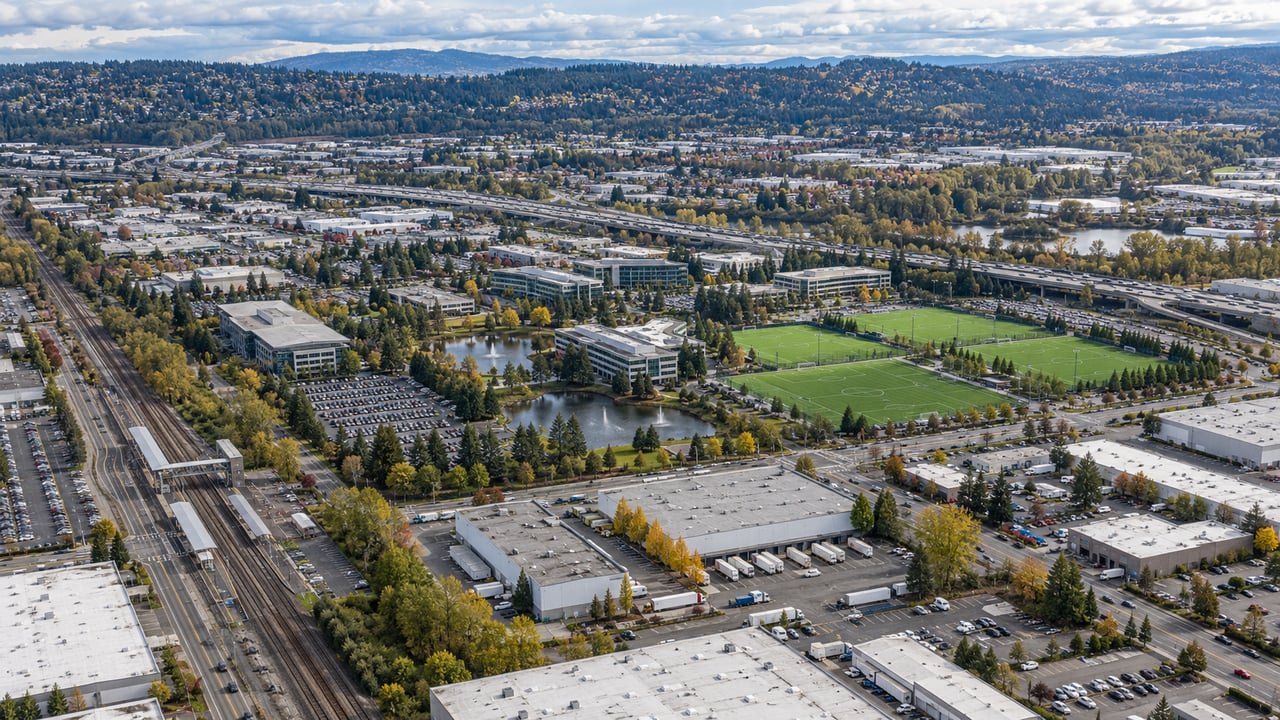
Renton's Valley is still largely an industrial, warehousing and employment district, but the types of development being proposed there are changing.
The City of Renton is preparing a Valley Subarea Plan to create a more detailed framework for land use, transportation, housing, economic development and public facilities in the area. City officials say several property owners are pursuing new development types that could introduce significant residential, health-care and professional-office uses into a district historically centered on logistics, light manufacturing and employment.
At the same time, Longacres is undergoing environmental review for a large mixed-use master-plan proposal that includes approximately 3,000 residential units along with offices, medical uses, industrial space, retail, hotels and an entertainment venue.
That does not mean 3,000 homes have been approved or that Renton's entire Valley is becoming residential.
It means the City is deciding how a changing mix of housing, jobs, industry and transportation should fit together over the long term.
Key takeaways
- The Renton Valley Subarea Plan is still being prepared.
- The Valley remains an important industrial, warehousing and employment district.
- The City is considering how significant housing, health-care, office and mixed-use development could fit alongside existing businesses.
- Longacres is a separate private master-plan proposal within the broader Valley area.
- The current Longacres proposal includes approximately 3,000 residential units, but those homes should not be described as already approved.
- Sounders FC and Alaska Airlines already have major facilities in the Valley area, while the City also references a future Seattle Children's presence.
- Transportation and freight movement will be important because roads such as SW 43rd Street continue to carry substantial regional and industrial traffic.
- The Subarea Plan could eventually influence land-use policies, infrastructure priorities and development rules.
- It does not automatically change the zoning or development rights of every parcel.
- Buyers, investors and homeowners should distinguish the district plan from current zoning and individual project approvals.
What is the Renton Valley Subarea Plan?
The Valley Subarea Plan is a detailed planning effort focused on one specific part of Renton.
Unlike Renton's citywide Comprehensive Plan, a subarea plan looks more closely at a smaller geography and asks how land uses, transportation, housing, businesses and public investments should work together there.
Renton describes the Valley as a largely industrial and warehousing district that straddles I-405 west of SR 167. It has long benefited from highway and rail access and has played an important role in logistics, manufacturing and employment.
The City says the new plan will create direction for:
- Land use
- Housing
- Transportation
- Economic development
- Recreation
- Public facilities
- Future public and private investment
City of Renton Valley Subarea Plan
Why is Renton creating a Valley plan now?
The short answer is that the development market is already changing.
Renton says new development proposals are challenging the Valley's historic land-use pattern. Instead of looking only at warehouses, logistics and industrial businesses, property owners are considering housing, health care, professional offices and other new uses.
The City also identified the Valley plan as one of its highest long-range planning priorities in July 2026.
That update specifically connected the work to employment growth from Sounders FC, Alaska Airlines and a future Seattle Children's campus.
So this is not simply a plan about what Renton might look like several decades from now.
It is also a response to development proposals and employment changes happening today.
What is happening at Longacres?
Longacres is the clearest example of how significant the Valley's land-use transition could become.
Washington's State Environmental Policy Act register shows that Unico Properties is seeking master-plan and environmental review for a mixed-use redevelopment at Longacres.
The overall Longacres site is approximately 158 acres. The proposed project area covers roughly 85 acres.
The application proposes:
- Approximately 3,000 residential units
- Approximately 1.4 million square feet of future commercial and medical office space
- Approximately 230,000 square feet of industrial uses
- Approximately 100,000 square feet of retail, food and beverage uses
- Two hotel sites
- An 8,000-person music venue
- Approximately 6,500 parking stalls
The proposal would also retain approximately 330,000 square feet of existing commercial space.
Washington Department of Ecology Longacres SEPA record
Are 3,000 homes already approved at Longacres?
No. They should be described as proposed residential units within an active master-plan and environmental-review process.
The Ecology record identifies the project as being under Hearing Examiner Master Plan Review and SEPA review.
It also states that additional permit applications are expected as the proposal is refined.
That distinction is important.
A master-plan application can show us the scale and type of development being considered. It does not mean every building, home, road or use has received final approval.
Is Longacres the same thing as the Valley Subarea Plan?
No.
Longacres is a specific private development proposal.
The Valley Subarea Plan is the City's larger planning framework for the surrounding district.
Longacres helps explain why the City is doing the planning work now, but the Valley plan covers broader questions involving multiple properties, businesses, transportation corridors and future investment.
Readers should not use "Longacres project" and "Valley Subarea Plan" interchangeably.
Could the Valley Subarea Plan bring more housing?
Yes, more housing is one of the possibilities being studied.
Renton specifically identifies residential development as one of the new uses creating pressure to rethink the Valley's traditional employment pattern.
Longacres demonstrates the possible scale of that change.
But a planning document and actual housing production are two different things.
For new homes to be built, a project may still need:
- Appropriate zoning
- Environmental review
- Infrastructure capacity
- Master-plan or site-plan approval
- Building permits
- Financing
- Market feasibility
The Subarea Plan can create direction and potentially lead to future policy or zoning changes.
It does not construct the housing itself.
For broader context on how the entire city is planning for housing and employment growth, see our guide to Renton's long-term growth and housing demand.
Is Renton's entire Valley being rezoned for housing?
There is no basis today for saying the entire Valley is being converted from industrial land to residential zoning.
Renton's stated goal is more balanced.
The City says the plan should support existing uses and new opportunities while considering housing, employment, transportation and economic development together.
That matters because the Valley still has important industrial and freight functions.
A future plan could recommend changes in certain areas. Some properties could become more appropriate for mixed-use or residential development.
Other locations may continue to be better suited for employment, industrial or logistics uses.
The final plan, adopted zoning and parcel-specific regulations will matter more than a general assumption that "housing is coming."
What happens to industrial and warehouse businesses?
Industrial uses remain part of the Valley's current identity and economy.
Renton's challenge is not simply deciding whether to replace industry with housing.
It is figuring out how different uses can operate together.
That could involve questions such as:
- Where should industrial and freight-dependent businesses remain concentrated?
- Where could housing be compatible?
- How much separation is needed between homes and intensive commercial or industrial uses?
- Where should offices, health care or retail be encouraged?
- Which roads must continue to prioritize freight?
- What transportation improvements would be needed if more people begin living in the Valley?
These questions matter because housing and industrial development can have very different expectations involving truck traffic, noise, pedestrian access, parking and hours of operation.
For investors, that is another reason not to assume that every industrial parcel becomes a residential redevelopment opportunity simply because the Valley plan discusses housing.
For additional state-level land-use context, see our guide to Washington's new rules for housing in commercial and mixed-use areas.
How is employment already changing the Valley?
Employment growth is a major part of this story.
Seattle Sounders FC established its headquarters and training facility at Longacres.
In February 2026, Alaska Airlines opened a 660,000-square-foot training facility on a 19-acre property near Longacres. The center is designed to train thousands of Alaska and Hawaiian Airlines employees.
City of Renton: Alaska Airlines training facility
The City also continues to identify a future Seattle Children's campus as one of the Valley's expected employment drivers.
That gives the Subarea Plan an important employment question:
If thousands of people work in or near the Valley, should more of the district also provide housing, services, recreation and transportation choices for those workers?
The answer will depend on the final plan, but that relationship between jobs and housing is likely to remain central.
How could transportation change?
Transportation is one of the most important parts of the Valley plan because this is already a heavily traveled employment and freight district.
Renton says the planning process will consider:
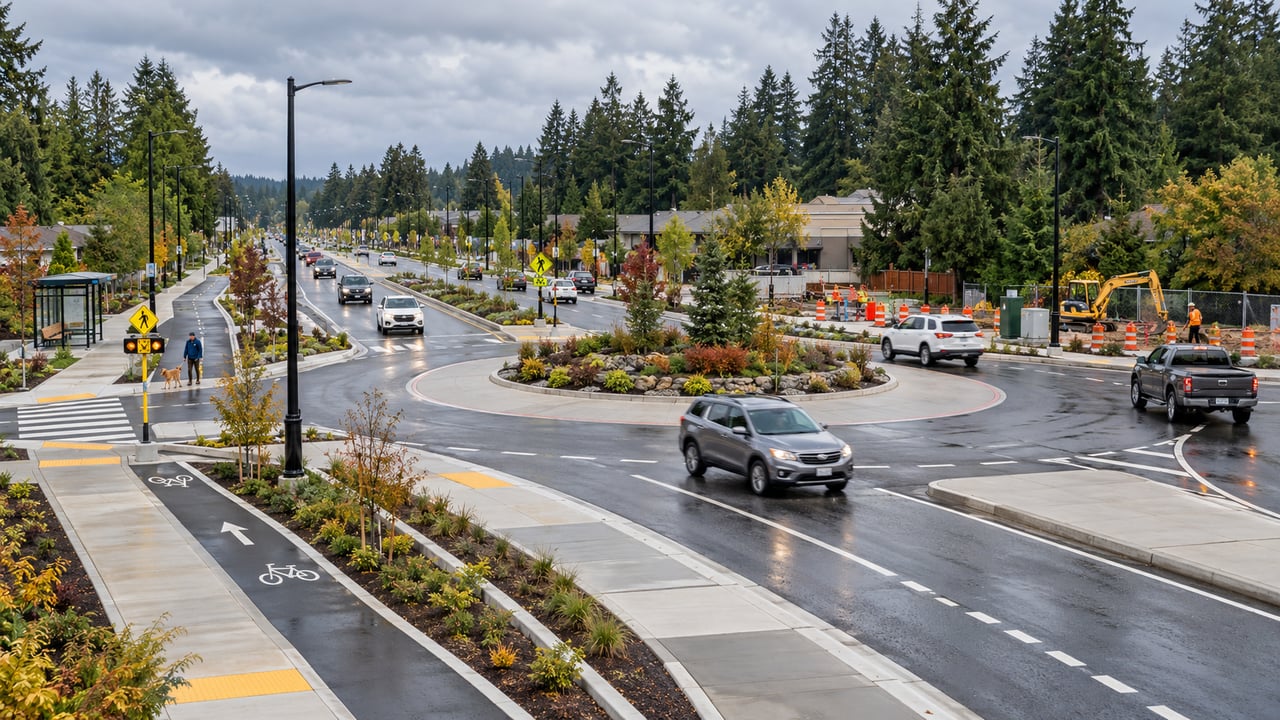
- Better bicycle facilities
- Improved pedestrian connections
- Accessibility improvements
- Modernized traffic systems
- Connections to transit
- Connections to regional transportation corridors
Those goals will need to coexist with roads that already carry large numbers of commuters and trucks.
SW 43rd Street shows the scale of the challenge
The City says SW 43rd Street carries approximately 30,000 vehicles per day across five to six travel lanes.
It is also a designated T-1 truck route and provides connections to SR 167, Valley Medical Center, IKEA, Costco and Southcenter Parkway.
City of Renton SW 43rd Street project information
That existing freight and commuter role will matter if more housing, offices and other uses are added nearby.
Oakesdale Avenue has also been upgraded
Renton completed its Oakesdale Avenue SW pavement-preservation project in June 2026.
Improvements included bike lanes, updated channelization and ADA intersection upgrades along the corridor between SW 34th Street and SW 16th Street.
City of Renton Oakesdale Avenue project
These projects are useful examples of current transportation conditions and investment in the Valley.
They should not be described as projects created or funded by the Valley Subarea Plan.
Could the Valley eventually become a PSRC Regional Center?
Renton says the Valley Subarea Plan could help the City pursue a future Puget Sound Regional Council Regional Center designation for the area.
But there is an important distinction.
Renton already has an existing PSRC Regional Growth Center.
That existing center includes areas around downtown Renton, The Landing, Southport and the Boeing Renton Plant. PSRC redesignated Renton's existing center in 2026, with conditions related to future planning work.
The Valley discussion concerns the possibility of future center status for this different geography.
PSRC says designated regional centers are intended to accommodate significant housing and employment growth and are priority areas for certain PSRC-managed federal transportation funds.
However, PSRC is not currently accepting applications for new centers. The agency says the next application window is expected in 2027 or 2028.
So the accurate current description is:
Renton is considering how the Valley plan could position the area for a future regional-center application. The Valley does not currently have a separate new designation.
What physical constraints could affect redevelopment?
Large redevelopment projects are shaped by much more than zoning.
The official Longacres environmental record identifies several site conditions that will have to be considered as that project advances.
They include:
- High seismic-hazard areas
- FEMA Zone AE special flood-hazard areas
- Regulated shorelines
- Regulated slopes
- Wetlands
These conditions belong specifically to the Longacres project area and should not automatically be assigned to every parcel in the Valley.
But they demonstrate why a site's development potential cannot be determined just by looking at a zoning map.
Other issues that can matter include:
- Stormwater
- Utilities
- Road capacity
- Environmental mitigation
- Freight circulation
- Emergency access
- Soil and seismic conditions
- Infrastructure costs
For investors, development rights on paper are only the beginning of the feasibility analysis.
What could the plan mean for property owners and investors?
For investors and commercial property owners, the Valley Subarea Plan is important because subarea planning can eventually influence the rules and public investments surrounding a property.
That can include:
- Future land-use designations
- Zoning
- Density
- Master-plan standards
- Development agreements
- Road and infrastructure priorities
- Public facilities
- Pedestrian and transit improvements
Renton has already changed parts of its master-plan and development-agreement review process for the Valley Community Planning Area through Ordinance 6198 in 2026.
That does not mean every parcel has new residential development rights.
A property owner evaluating redevelopment should check, in order:
- Current zoning
- Current comprehensive-plan designation
- Site constraints
- Applicable Valley development standards
- Utility and transportation capacity
- Required environmental review
- Project-specific permits
The Subarea Plan is an important signal of direction, but current adopted law controls what can actually be done with a property today.
For a broader look at this issue, see our guide to Renton real estate, ADUs and redevelopment trends in 2026.
What could this mean for nearby homeowners?
For an existing homeowner, the Valley plan matters less as a technical zoning document and more because of what future development could change nearby.
Things worth watching include:
- Traffic patterns
- New employers
- Construction
- New housing supply
- Retail and restaurants
- Transit access
- Pedestrian and bicycle connections
- Changes in surrounding land use
- Noise and activity levels
Some changes may improve access to jobs or services.
Others may create temporary construction impacts or change how an area feels.
Those effects will vary by property.
A homeowner several miles from Longacres should not assume the same impact as someone directly next to a redevelopment site or major transportation corridor.
Could the Valley plan increase property values?
There is no reliable way to predict that from the Subarea Plan alone.
Planning changes can affect expectations about how land might be used.
They do not guarantee appreciation.
For a commercial parcel, value could depend on whether future zoning expands or limits feasible uses.
For a home, value could be influenced by new services, transportation, construction, traffic, housing supply and buyer preferences.
Other market factors still matter, including:
- Interest rates
- Inventory
- Employment
- Property condition
- Financing
- Comparable sales
- Development costs
- Timing
"More development" should not automatically be translated into "higher property value."
What should buyers and relocating families check?
Someone considering a home near the Renton Valley should look at both today's surroundings and the area's planning direction.
Useful due diligence includes:
- Distance from Longacres and other active development sites
- Nearby industrial and freight uses
- Current zoning of adjacent parcels
- Major roads and truck routes
- Transit access
- Construction notices
- Environmental and flood maps
- Future site plans
- Planned employment centers
- Walking and bicycle connections
A buyer who values proximity to new jobs may see the Valley differently from someone prioritizing a quiet residential setting.
Neither preference is wrong.
The important part is understanding the area before purchasing.
What should investors and commercial owners watch next?
Several milestones could tell us much more about the Valley's future:
- Draft Valley Subarea Plan documents
- Public workshops and community feedback
- Comprehensive Plan amendments
- Zoning proposals
- Longacres environmental-review documents
- Longacres master-plan decisions
- Transportation studies
- Development agreements
- Seattle Children's project details
- Future PSRC Regional Center discussions
- City Council adoption of the final Valley plan
Renton currently estimates the subarea-planning process will take approximately 12 to 18 months.
That means today's plan concepts should still be treated as work in progress.
Expert insight: A subarea plan shows direction, not a parcel guarantee
The Valley Subarea Plan can tell buyers and property owners a lot about where Renton is considering future growth.
It cannot tell you exactly what will be built next door.
For investors, the useful sequence is:
district plan first, current zoning second, project approval third.
A plan might eventually support more housing or mixed-use development, but a specific parcel still has to work under adopted zoning, infrastructure requirements, environmental conditions and project review.
For homeowners and buyers, the same principle applies.
Use the plan to understand direction.
Use current permits, zoning and site-specific documents to understand what is actually happening near a property.
Frequently asked questions about the Renton Valley Subarea Plan
What is the Renton Valley Subarea Plan?
It is a City of Renton planning process that will provide more detailed direction for land use, housing, transportation, economic development and public facilities in the Valley district.
Where is Renton's Valley area?
The City describes the planning area as a largely industrial and warehousing district straddling I-405 west of SR 167.
Why is Renton creating the plan now?
The City says significant development proposals are challenging the area's traditional land-use pattern, including potential housing, health-care and office development.
Is Longacres part of the Valley?
Yes, Longacres is an important redevelopment site within the broader Valley context. Its master-plan proposal is separate from the City's Valley Subarea Plan.
How many homes are proposed at Longacres?
The current master-plan proposal includes approximately 3,000 residential units.
Are those 3,000 homes already approved?
They should not be described as 3,000 completed or finally approved homes. They are part of an active master-plan and environmental-review proposal.
Is Renton's entire Valley being rezoned for apartments?
No current evidence supports that conclusion. The City is studying how housing and other new uses could fit alongside existing employment and industrial uses.
Will industrial businesses stay in the Valley?
The City's stated planning approach is to balance existing uses with new opportunities. The final mix will depend on the plan, zoning and individual redevelopment decisions.
Is the Valley already a PSRC Regional Growth Center?
The Valley does not currently have a separate new Regional Center designation. Renton already has an existing Regional Growth Center elsewhere in the city, while the Valley plan may help support a future application for this area.
When will the Valley Subarea Plan be finished?
Renton says the process will likely take approximately 12 to 18 months.
Could the plan affect property values?
Possibly, but there is no reliable basis to predict a specific increase or decrease. Adopted zoning, actual development, infrastructure, market conditions and a property's location will matter.
Related Renton real estate guides
For broader citywide context, read our guide to Renton's long-term growth plan and housing demand.
For parcel and redevelopment questions, see Renton real estate in 2026: ADUs, land use and redevelopment trends.
For regional transportation context, see our RapidRide I Line guide for Renton, Kent and Auburn buyers.
Helpful resources
For the most current information, start with the primary sources:
City of Renton Valley Subarea Plan
Washington Department of Ecology Longacres Campus Master Plan SEPA record
City of Renton long-range planning and programming
Puget Sound Regional Council Regional Centers information
City of Renton Oakesdale Avenue improvements
City of Renton SW 43rd Street transportation project
Thinking about buying, selling or investing in Renton?
Major planning changes can create opportunities, but they can also make property-specific due diligence more important.
If you are buying, selling, relocating or evaluating an investment property in Renton or elsewhere in South King County, reach out to Perkins & Associates. We can help you look at the property, current market conditions and the local planning information that matters to your decision.
📧 [email protected]
📱 (206) 960-4985
Honest. Effective. Reliable.
This article provides general real estate information and is not legal advice. Association documents, purchase agreements, statutory applicability, and transaction deadlines can vary. Buyers and sellers should review their specific documents and seek legal advice when a legal interpretation is needed.