King County, Washington, continues to stand out as a long-term real estate investment market due to sustained job growth, constrained housing supply, and consistent regional demand. For buyers evaluating whether purchasing property here supports long-term financial goals, understanding the structural drivers behind the market is essential.
Unlike short-term housing cycles driven by speculation, King County’s performance is closely tied to employment centers, infrastructure investment, and geographic constraints that limit overbuilding.

What Defines a Strong Long-Term Real Estate Market?
A durable real estate market typically includes:
-
Diverse and expanding employment sectors
-
Population growth
-
Infrastructure investment
-
Limited housing supply relative to demand
-
Regional economic resilience
The Washington State Office of Financial Management also tracks steady population projections for the Puget Sound region.
Employment Anchors That Support Housing Demand
Real estate stability begins with employment. King County’s economy is anchored by major employers such as:
Amazon, Boeing, the Port of Seattle, and a wide range of technology, healthcare, logistics, and aerospace firms.
The Puget Sound Regional Council highlights continued regional job growth across multiple industries.
A diverse employment base reduces reliance on a single sector and supports steady housing absorption during economic shifts.

Limited Land and Geographic Constraints
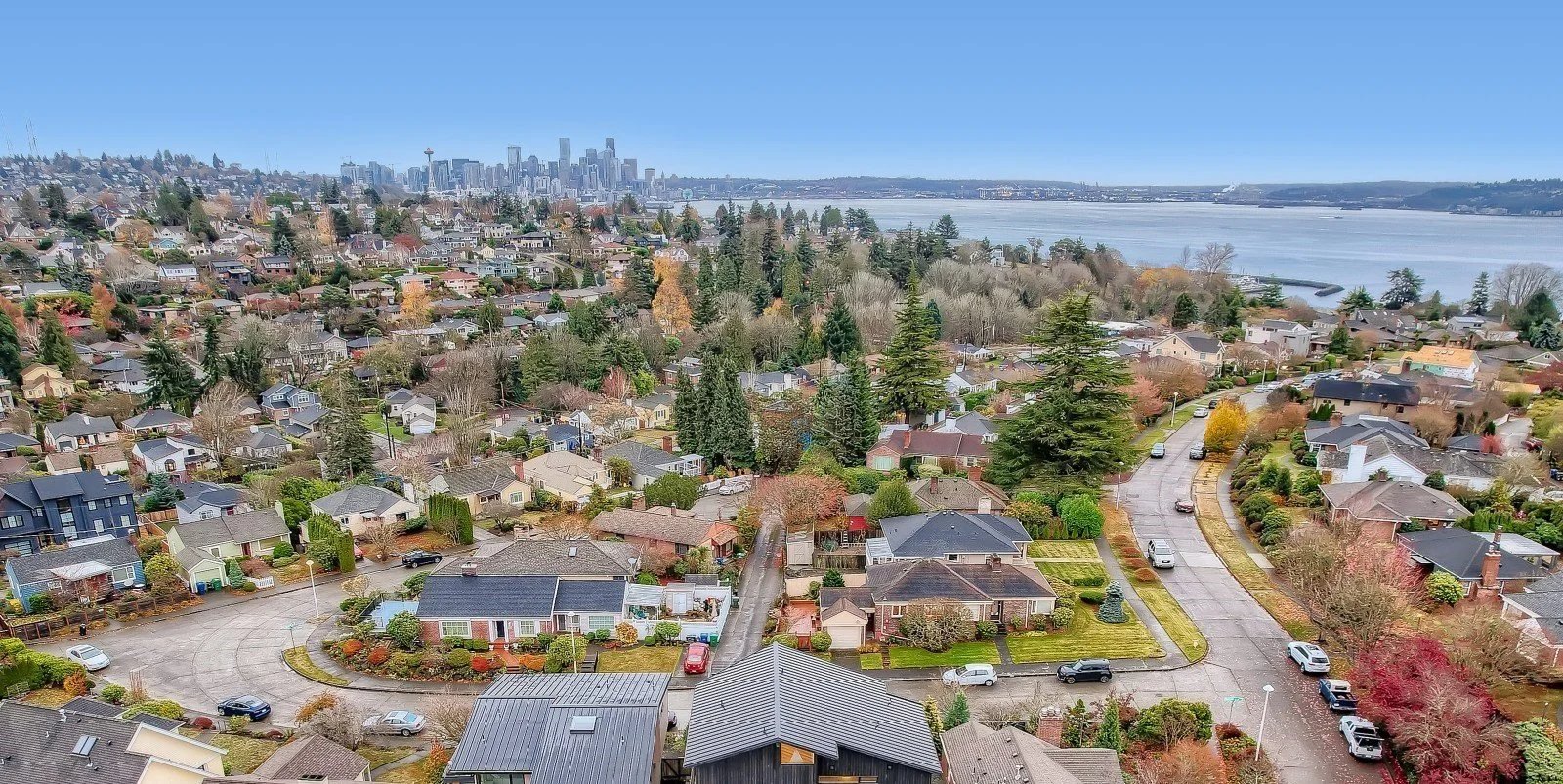
King County’s geography plays a significant role in long-term appreciation trends. With Puget Sound to the west, Lake Washington to the east, and zoning regulations shaped by Washington’s Growth Management Act, large-scale outward expansion is limited.
When land supply is constrained and demand remains steady, price pressure often persists over time. Buyers considering long-term ownership benefit from understanding how physical and regulatory boundaries influence housing inventory.
South King County’s Growing Role
While Seattle receives national attention, communities in South King County, including Renton, Tukwila, Burien, Des Moines, and Federal Way, have experienced notable demand due to relative affordability and improved transit connectivity.
Supply and Demand Dynamics
King County consistently operates in a supply-constrained environment. Data from the Northwest Multiple Listing Service frequently reflects tight inventory levels relative to buyer demand.
When inventory remains limited, pricing stability improves. While short-term fluctuations occur, long-term trends are shaped by the balance between available housing and incoming residents.

Rental Market Strength and Investor Signals
Even for primary residence buyers, rental market performance matters because it reflects overall housing demand. King County’s rental market has historically maintained low vacancy rates in many submarkets.
HUD’s Washington State housing data offers insight into fair market rents and regional trends.
Strong rental demand provides flexibility for buyers who may convert properties to rentals in the future or hold long term as part of broader financial planning.
Practical Considerations for Buyers Evaluating Long-Term Value
Buyers assessing King County as a long-term investment market should evaluate:
-
Proximity to employment hubs
-
Access to transit corridors
-
Local zoning and redevelopment potential
-
School district boundaries
-
Neighborhood-level appreciation trends
-
Property condition and long-term maintenance needs
Reviewing municipal planning departments and growth projections can offer additional context before making a purchase decision.
Long-term strength does not eliminate short-term volatility. Buyers should align purchase timing with personal financial stability and ownership horizon.
Strategy: How to Approach King County Real Estate Thoughtfully
Long-term investment does not necessarily mean purchasing the most expensive property in the fastest-growing neighborhood. Instead, it often involves:
-
Identifying stable submarkets with consistent demand
-
Avoiding overleveraging during competitive cycles
-
Prioritizing functional layouts and location fundamentals
-
Planning for 5–10+ year ownership horizons
Buyers who focus on structural drivers, employment, supply limitations, infrastructure, are typically better positioned than those reacting to short-term headlines.
Expert Insight: What This Means Locally
Our team views King County’s long-term investment appeal through a practical lens. While appreciation has historically been strong, disciplined buying remains critical.
Areas in South King County often present different entry points than Seattle core neighborhoods, but both are influenced by the same regional economic forces. Understanding submarket differences, including transit access, redevelopment potential, and neighborhood stability, allows buyers to make decisions rooted in data rather than momentum.
The goal is not chasing rapid growth. It is positioning within a region that continues to demonstrate structural resilience.
Frequently Asked Questions
Is King County still a good place to buy long term?
Many buyers view King County as a stable long-term market due to employment diversity, infrastructure investment, and limited land supply.
Does South King County appreciate as strongly as Seattle?
Appreciation rates vary by neighborhood and cycle. South King County often provides lower entry prices with growth tied to transit and job access.
How important is job growth to home values?
Employment growth directly influences housing demand. Diverse job sectors reduce volatility and support sustained absorption.
Should buyers worry about market corrections?
Short-term corrections are normal in real estate. Long-term ownership horizons tend to smooth cyclical fluctuations.
Is rental demand relevant if buying a primary residence?
Yes. Rental demand reflects overall housing need and provides optional flexibility if circumstances change.
Helpful Resources
U.S. Census Bureau – King County Data
https://www.census.gov/quickfacts/kingcountywashington
Population and demographic data for the region.
https://www.census.gov/quickfacts/kingcountywashington
Population and demographic data for the region.
Washington State Office of Financial Management
https://ofm.wa.gov/washington-data-research/population-demographics/population-estimates
Official state population projections.
https://ofm.wa.gov/washington-data-research/population-demographics/population-estimates
Official state population projections.
Sound Transit Expansion Plans
https://www.soundtransit.org/system-expansion
Light rail and transit infrastructure updates.
https://www.soundtransit.org/system-expansion
Light rail and transit infrastructure updates.
Northwest Multiple Listing Service
https://www.nwmls.com/
Regional housing inventory and listing standards.
https://www.nwmls.com/
Regional housing inventory and listing standards.
National Association of REALTORS® Research
https://www.nar.realtor/research-and-statistics
Housing market research and trend analysis.
https://www.nar.realtor/research-and-statistics
Housing market research and trend analysis.
HUD Washington Market Data
https://www.huduser.gov/portal/datasets/fmr.html
Rental market benchmarks and fair market rent data.
https://www.huduser.gov/portal/datasets/fmr.html
Rental market benchmarks and fair market rent data.
Start the Conversation
If you are considering purchasing in King County and want to evaluate long-term positioning, our team can help you assess neighborhoods, market conditions, and strategy based on your goals.